
Author

admin

Browsing

Here’s a quick recap of the crypto landscape for Monday (December 1) as of 9:00 p.m. UTC.

Get the latest insights on Bitcoin, Ether and altcoins, along with a round-up of key cryptocurrency market news.

Bitcoin and Ether price update

Bitcoin (BTC) was priced at US$85,482.46, down by 6.4 percent over 24 hours.

Bitcoin price performance, December 1, 2025.

Chart via TradingView.

Bitcoin marked its largest single-day decline in a month, continuing a sell-off that started in November.

This sharp downturn was influenced largely by rising expectations of a Bank of Japan rate hike at its December meeting, which triggered a surge in Japanese bond yields, strengthening the yen and prompting global investors to pull capital from risk assets like Bitcoin. This caused liquidations of speculative long positions and created downward price pressure.

However, significant technical support levels lie around US$86,000 to US$79,600, with further downside possible to US$67,700 and major support between US$45,000 and US$70,000 if bearish momentum persists. Holding above roughly US$85,200 is critical to avoid deeper bearish territory.

Farzam Ehsani, CEO of cryptocurrency exchange VALR, added that concerns about MSCI potentially excluding major crypto-holding companies such as Strategy from global indices are adding pressure through expected forced sell-offs, further weakening market structure and liquidity.

“The recovery of the cryptocurrency market, and Bitcoin in particular, after the decline of the last month and a half, will take some time. The main questions at the moment are how the market will close out this year and whether Bitcoin will recover above $100,000 in December.”

Ether (ETH) also experienced a steep decline, priced at US$2,757.79, down by 8.9 percent over 24 hours.

Derivatives data

Derivatives data showed US$10.93 million liquidated in BTC shorts positions over the final four hours of trading, indicating short sellers getting squeezed out as price stabilized rather than accelerating lower.

Open interest edged up 0.50 percent to US$57.63 billion, showing fresh positions entering despite the dip, which often signals sustained trader interest and potential stabilization or rebound setup.

A funding rate of -0.001 percent reflects mild bearish sentiment, common in corrections but not extreme enough to indicate panic selling. BTC’s RSI at 32.58 marks deeply oversold territory, suggesting selling may be nearing a climax and creating conditions for a short-term bounce if support holds.

Altcoin price update

  • XRP (XRP) was priced at US$2.02, down by eight percent over 24 hours.
  • Solana (SOL) was trading at US$124.54, down by 9.3 percent over 24 hours.

Today’s crypto news to know

Bitcoin’s weekend slide wipes out US$637 million in leveraged positions

Bitcoin’s latest downturn over the weekend triggered a wave of liquidations that erased roughly US$637 million across futures markets.

The selloff pushed Bitcoin to an intraday low near US$85,700, extending its monthly decline past 21 percent and dragging Ethereum, XRP, and other majors sharply lower. The slump began as momentum-driven selling forced heavily leveraged longs to unwind, turning a routine correction into a fast, disorderly slide.

Comments from Strategy CEO Phong Le about potentially selling part of the company’s sizable Bitcoin holdings added to jitters, even though prediction markets continue to see a low probability of actual disposals this year.

“We can sell Bitcoin, and we would sell Bitcoin if needed to fund our dividend payments below 1x mNAV,” Le said in a podcast.

The company currently controls 649,870 BTC, which valued at about US$56.26 billion at current prices.

Further, China’s central bank reiterating its hard line against crypto activity further weighed on sentiment heading into the final month of the year.

Goldman Sachs boosts ETF offerings with Innovator Capital acquisition

Goldman Sachs (NYSE:GS) has agreed to buy Innovator Capital Management, a company specializing in defined outcome ETFs, in a deal worth about US$2 billion in cash and stock, according to a Monday announcement.

Defined outcome ETFs are special funds that limit losses or cap gains for investors using options contracts.

Innovator’s US$28 billion in assets and 159 ETFs will significantly enhance Goldman Sachs Asset Management’s ETF portfolio, increasing that bank’s total ETF lineup from US$51 billion to US$79 billion.

The acquisition payment partly depends on Innovator meeting certain performance targets after the deal closes, which were not publicly disclosed. The deal is expected to close in Q2 2026, subject to regulatory approval and other usual conditions.

Goldman Sachs will fully own the Innovator business, integrating its 60-plus employees into Goldman’s teams. However, Innovator’s investment managers and services will remain unchanged.

Tether blasts S&P after fresh downgrade

Tether pushed back forcefully this week after S&P Global cut its assessment of USDT’s peg stability, assigning the stablecoin the lowest score on the agency’s scale.

S&P pointed to weaker reserve quality, shrinking cash-equivalent holdings, and rising exposure to secured loans and Bitcoin as reasons for the downgrade.

The report noted that Tether’s Bitcoin holdings now exceed the cushion meant to absorb volatility, increasing the risk that a sharp price drop could leave the token undercollateralized.

Tether’s leadership dismissed the rating as biased and politically motivated.

‘Some influencers are either bad at math or have the incentive to push our competitors,’ Tether CEO Paolo Ardoino said in a recent post on X.

After the downgrade last week, Ardoino also maintained that ‘the traditional finance propaganda machine is growing worried when any company tries to defy the force of gravity of the broken financial system.’

The downgrade also comes as Tether’s mining affiliate winds down operations in Uruguay after months of unpaid power bills and stalled expansion plans.

Japan prepares 20 percent flat tax on crypto gains

Japan is moving toward a flat 20 percent tax on cryptocurrency gains, a change that would replace the current progressive regime that can push rates above 50 percent for active traders.

Nikkei Asia reported that under the proposal, crypto income would be placed into a separate category similar to equities, with the goal of reducing distortions that discourage trading or push users offshore.

Lawmakers backing the plan say aligning digital assets with other investment products could draw liquidity back to domestic exchanges and boost overall tax receipts.

The reform is expected to be finalized as part of the country’s 2026 tax framework, with revenue split between the national and local governments.

Securities Disclosure: I, Giann Liguid, hold no direct investment interest in any company mentioned in this article.

Securities Disclosure: I, Meagen Seatter, hold no direct investment interest in any company mentioned in this article.

This post appeared first on investingnews.com

Goldgroup Mining (TSXV:GGA, OTC:GGAZF) is a Canadian gold company advancing a portfolio of high-quality producing and development assets in Mexico. With 100 percent ownership of Cerro Prieto, Pinos and the newly acquired San Francisco mine, the company is positioned for disciplined, near-term production growth.

Goldgroup’s strategy is clear: optimize and expand production at its flagship Cerro Prieto mine, advance Pinos toward a production decision, and restart the large-scale San Francisco mine. Together, these projects target over 100,000 ounces of annual production, with additional upside from exploration, resource growth, and future acquisitions.

The company is led by an experienced team with deep expertise in developing and optimizing Mexican mines. Backed by strong financial support from the Calu Group and Luca Mining founders, Goldgroup benefits from a proven track record in value creation through mine development, operational turnarounds, and strategic M&A.

Company Highlights

  • Two operating or near-term production gold assets in Mexico, 100-percent-owned and fully permitted.
  • Cerro Prieto expansion completed, increasing from ~12,500 oz/year to 30,000+ oz/year during 2026 and beyond, including tailings re-processing.
  • Its second asset, Pinos, is a fully permitted high-grade underground development project with historical resources and +90 percent metallurgical recoveries.
  • San Francisco acquisition in progress, a past producer capable of ~40,000 oz/year with significant exploration upside.
  • Aggressive M&A strategy aimed at fast-tracking Goldgroup into the mid-tier producer category with advanced due diligence nearing completion. .
  • Backed by the Calu Group and the founders of Luca Mining, bringing extensive operational and financing expertise in Mexico.

This GoldGroup Mining profile is part of a paid investor education campaign.*

Click here to connect with GoldGroup Mining (TSXV:GGA) to receive an Investor Presentation

This post appeared first on investingnews.com

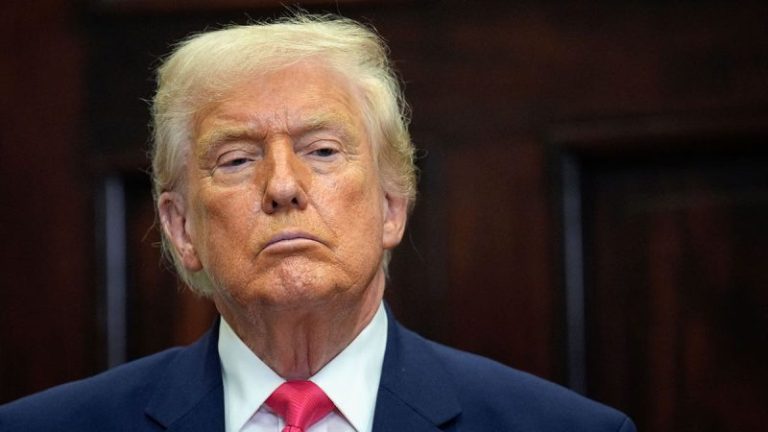
President Donald Trump announced in a Truth Social post on Tuesday that he would ‘fully and completely’ terminate any documents signed by former President Joe Biden’s autopen, including pardons and commutations.

‘Any and all Documents, Proclamations, Executive Orders, Memorandums, or Contracts, signed by Order of the now infamous and unauthorized ‘AUTOPEN,’ within the Administration of Joseph R. Biden Jr., are hereby null, void, and of no further force or effect,’ Trump wrote.

‘Anyone receiving ‘Pardons,’ ‘Commutations,’ or any other Legal Document so signed, please be advised that said Document has been fully and completely terminated, and is of no Legal effect. Thank you for your attention to this matter!’

This post appeared first on FOX NEWS

Secretary of War Pete Hegseth chastised the press following media reports that he signed off on a second strike against an alleged drug boat after the first one left survivors. 

The Trump administration has come under renewed scrutiny for its strikes in the Caribbean targeting alleged drug smugglers, after the Washington Post reported on Friday that Hegseth verbally ordered everyone onboard the alleged drug boat to be killed in a Sept. 2 operation. The Post reported that a second strike was conducted to take out the remaining survivors on the boat. 

On Monday, the White House confirmed that a second strike had occurred, but disputed that Hegseth ever gave an initial order to ensure that everyone on board was killed, when asked specifically about Hegseth’s instructions.

Hegseth said that he watched the first strike live, but did not see any survivors at that time amid the fire and the smoke — and blasted the press for their reporting.

‘This is called the fog of war. This is what you in the press don’t understand,’ Hegseth told reporters at a Cabinet meeting on Tuesday. ‘You sit in your air-conditioned offices or up on Capitol Hill and you nit pick, and you plant fake stories in the Washington Post about ‘kill everybody’ phrases on anonymous sources not based in anything, not based in any truth at all. And then you want to throw out really irresponsible terms about American heroes, about the judgment that they made.’ 

Hegseth said that after watching the first strike, he left for a meeting and later learned of the second strike. The White House said Monday that Hegseth had authorized Adm. Frank ‘Mitch’ Bradley to conduct the strikes, and that Bradley was the one who ordered and directed the second one. 

At the time of the Sept. 2 strike, Bradley was serving as the commander of Joint Special Operations Command, which falls under U.S. Special Operations Command. He is now the head of U.S. Special Operations Command.

According to Hegseth, carrying out a subsequent strike on the alleged drug boat was the right call. 

‘Admiral Bradley made the correct decision to ultimately sink the boat and eliminate the threat,’ Hegseth said Tuesday. 

Meanwhile, reports of the second strike have attracted even more scrutiny from lawmakers on both sides of the aisle on Capitol Hill and calls for greater oversight, amid questions about the strikes’ legality. 

‘This committee is committed to providing rigorous oversight of the Department of Defense’s military operations in the Caribbean,’ Reps. Mike Rogers, R-Ala., and Adam Smith, D-Wash., who lead the House Armed Services Committee, said in a statement on Saturday. ‘We take seriously the reports of follow-on strikes on boats alleged to be ferrying narcotics in the SOUTHCOM region and are taking bipartisan action to gather a full accounting of the operation in question.’

Hegseth said Tuesday that although there has been a pause in strikes in the Caribbean because alleged drug boats are becoming harder to find, the Trump administration’s campaign against the influx of drugs will continue. 

‘We’ve only just begun striking narco-boats and putting narco-terrorists at the bottom of the ocean because they’ve been poisoning the American people,’ Hegseth said. 

The Trump administration has carried out more than 20 strikes against alleged drug boats in Latin American waters, and has bolstered its military presence in the Caribbean to align with Trump’s goal to crack down on the influx of drugs into the U.S.

This post appeared first on FOX NEWS

The Department of Justice (DOJ) on Friday charged five men from across the U.S. with running an online ‘child exploitation enterprise’ called ‘Greggy’s Cult,’ that allegedly used Discord servers to terrorize, blackmail and coerce minors into ‘horrific acts of self-harm.’

The indictment unsealed by federal prosecutors charges five individuals with ‘conspiracy to produce child pornography, conspiracy to receive and distribute child pornography, and conspiracy to communicate interstate threats.’

Hector Bermudez, 29, of Queens, New York; Zachary Dosch, 26, of Albuquerque, New Mexico; Rumaldo Valdez, 22, of Honolulu, Hawaii; David Brilhante, 28, of San Diego, California; and Camden Rodriguez, 22, of Longmont, Colorado, were arrested Tuesday will be arraigned in the Eastern District of New York at a later date, according to the DOJ.

Prosecutors described a ‘nightmarish platform on the internet,’ alleging that ‘Greggy’s Cult’ carried out ‘depraved conduct’ that included ‘repeatedly encouraging victims to kill themselves or encouraging them to insert household objects into their genitals or anus.’

‘These five defendants allegedly targeted vulnerable children and others via online platforms – they exploited, threatened, and harassed them, and encouraged horrific acts of self-harm,’ FBI director Kash Patel said in a statement. ‘The FBI is sending a message to those individuals involved in criminal activity through violent online networks: you can’t hide in the shadows hovering over a keyboard – we will find and hold accountable those who participate in these illegal and heinous acts.’

The indictment stated that the defendants allegedly engaged in the ‘production and distribution of child sex abuse material’ between January 2020 and January 2021, and also participated in other forms of ‘exploitation and harassment’ of both minors and adults.

According to prosecutors, the defendants and other members of ‘Greggy’s Cult’ met on Discord servers and ‘directed minor victims, who had joined a video call on either Discord or another video conferencing platform, to engage in sexually explicit or other degrading conduct.’

The group is also accused of finding victims on gaming platforms such as Roblox and Counter-Strike: Global Offensive.

The cult members allegedly captured screenshots and screen recordings of the ‘sexually explicit conduct’ before sharing it to other Discord servers and with each other, according to the DOJ.

Attorney General Pam Bondi reacted to the indictment, stating that ‘no child should ever be terrorized or exploited online, and no online platform should give refuge to predators.’

‘The Department of Justice will continue to protect children, support survivors, and hold accountable anyone who preys on the vulnerable – online or offline – with every tool we have,’ Bondi added.

Prosecutors also accused the defendants of extorting their targets, alleging that they tried to frame the adult victims as pedophiles or send malware to minor victims, which was then used as ‘leverage to get the victims to engage in degrading acts on camera.’

The defendants were allegedly able to convince victims to commit acts of ‘degradation,’ including having them be ‘owned’ by a member of the cult to demonstrate loyalty, or writing the names of cult members on their bodies, which prosecutors referred to as ‘fansigning.’

Acting Assistant Attorney General Matthew Galeotti of the DOJ’s Criminal Division said in a statement that the defendants were charged with an ‘unspeakable act of coercing and blackmailing children and adults to engage in self-harm and other degrading acts.’

U.S. Attorney Joseph Nocella Jr. for the Eastern District of New York called the alleged conduct ‘monstrous,’ adding that children were ‘at times driven to the brink of suicide.’

The DOJ stated that ‘Greggy’s Cult’ formed before the emergence of the ‘764’ network, another online child-exploitation group that the FBI has launched an intensified effort to take down.

Members of ‘764’ allegedly use popular online platforms such as Discord, Telegram and Roblox to recruit and manipulate minors.

This post appeared first on FOX NEWS

In March, President Donald Trump announced the Air Force’s new F-47 stealth fighter, built by Boeing.  So where is the Navy’s secret new carrier plane?

Fifteen years ago, the U.S. Navy read the signals from China and secretly started development of a long-range, stealthy plane to launch from aircraft carriers.  The Navy’s newest bird is more like a fighter-bomber, with the AI smarts to lead drones into combat and enough range to scare China.

Today that plane – known only as F/A-XX or fighter attack, experimental – is ready to go. Both Boeing and Northrop Grumman have flown test planes. Their prototypes are waiting in the wings; or rather, in discreet guarded hangars, most likely in Missouri and Florida. 

Yet, for some reason, the Pentagon isn’t in the mood to make the ‘downselect’ purchase decision. The delay is shocking and dangerous.

Congress wants the Navy plane so much they added nearly $1 billion to the budget to accelerate F/A-XX. ‘The U.S. Navy needs sixth-generation fighters. I’m concerned that any hesitancy on our part to proceed with the planned procurement of the sixth-gen fighters for the Navy will leave us dangerously outmatched in a China fight,’ Rep. Ken Calvert, R-Calif., the head of the House Appropriations Subcommittee on Defense, said on May 14. 

Of course, U.S. Navy F/A-18EFs have pounded Middle East targets during various air campaigns for almost three decades.  Just look at the damage they did to Houthi missile sites and weapons caches in Yemen during Operation Rough Rider this past spring.  But for the fierce fighting scenarios of the Pacific, the Navy pilots that fly from aircraft carriers need a new plane. 

All that President Trump has to do now is take this opportunity to pick the best plane for the Navy.

Here are six things to know about the Navy’s secretive project.

The Navy has not let us see photographs of the F/A-XX, obviously. Tantalizing concept art released over the summer reveals a smooth stealth shape, with a cockpit canopy similar to the F-35.  The diamond or delta-wing shape provides lift and range, especially at higher cruise altitudes. 

  In April, the Navy announced F/A-XX would have at least 25% more range than current fighters.  The range could be up to 1,000 miles, according to a top analyst’s estimate. Add in air refueling, longer-range missiles, and you have the ability to take the fight all across the Pacific.  I can tell you this: the Navy has been short of a true long-range fighter since the retirements of the A-6 Intruder and the F-14 Tomcat of TOPGUN fame, so range is a priority.

  While the F-35C excels with just one engine, the Navy preference has always been for two engines, due to all that flying over water. You won’t see the engines because they are tucked inside the plane to diminish heat signature. U.S. engine technology is far ahead of China’s, in areas like thermal management and overall thrust. 

Early stealth aircraft like the SR-71, F-117 and the B-2 sported flat black coatings to help absorb radar waves.  The current trend in stealth materials is an avian grey, like the B-21 Raider bomber now in production.  Fortunately, the U.S. is the world leader in aerospace-grade carbon fiber composites.

  Expect an impressive bomb bay for internal carriage of long-range missiles.  Current fighters like the Superhornet hang missiles from hard points under the wings.  To achieve stealth, the FA-XX will follow the path of the F-35C, and tuck missiles inside.  Sawtooth bomb bay doors help maintain the aircraft’s stealth profile.

Part of the Navy’s plan is to stock carriers with drone refuelers like the new MQ-25 Stingray to accompany the F/A-XX on its stealthy missions.  Since you ask, no, drones cannot do it all.  Naval strike demands payload to carry heavy bombs and missiles.  Plus, it turns out a pilot is pretty useful. The FA-XX can also control wingmen drones in the battlespace. With FA/XX, the Navy can target enemy ships, land bases, and radar sites.

Trump certainly understands the value of stealth after the B-2 bomber’s obliteration of Iran’s nuclear sites.  It’s unclear whether anyone has laid out for the president just how a massive risk the Pentagon is taking with naval aviation by slowing down F/A-XX.

Please note that China flew a stealthy demonstrator designed for carrier landings over a year ago.  On Nov. 7, China commissioned its third carrier, the Fujian, and is laying modules for a fourth carrier — designed to be bigger than the USS Gerald R. Ford and to run on nuclear power for the first time. In a few years, China may have six of its own carriers. That’s a serious threat.

Put simply, the Navy must have this long-range, stealthy fighter. The idea is to pair the FA/XX with long-range missiles so the carrier airwing regains the long-range punch they will need to maneuver and strike against China in the Pacific.

No one wants to say this, but without FA-XX, the carrier mission may diminish in the future.    

It’s past time for President Trump to make a decision. 

This post appeared first on FOX NEWS

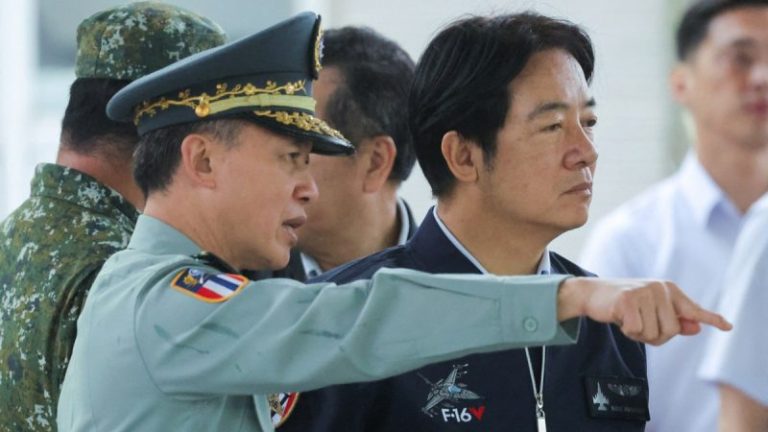
: Last week, Taiwan President William Lai unveiled a massive $40 billion supplemental defense procurement proposal, casting it as proof that the independently ruled, democratic island is serious about countering escalating military pressure from the People’s Republic of China (PRC). The PRC has not governed Taiwan for even a single day but claims it as its territory.

A State Department spokesperson told Fox News Digital that, ‘We welcome Taiwan’s announcement of a new $40 billion special defense procurement budget. Consistent with the Taiwan Relations Act and more than 45 years of commitment across multiple U.S. Administrations, the United States supports Taiwan’s acquisition of critical defense capabilities, commensurate with the threat it faces.’ 

The spokesperson also commended Taipei, ‘We also welcome the Lai administration’s recent commitments to increase defense spending to at least 3% of GDP by 2026 and 5% of GDP by 2030, which demonstrates resolve to strengthen Taiwan’s self-defense capabilities.’

The American Institute in Taiwan (AIT) – the de facto American embassy – responded very positively almost immediately after Lai’s proposal was announced. Courtney Donovan Smith, a political columnist for the Taipei Times, told Fox News Digital that the strong support from AIT, ‘Amounts to a public American stamp of approval.’

A day after Lai’s announcement, Taiwan’s Defense Minister, Wellington Koo, told the media that preliminary talks have already been held with the United States about the kinds of weapons it wants to buy as part of this budget that would run from 2026 to 2033. But Koo said he could not make any details of discussions public until Congress receives a formal notification.

Yet some in Taiwan expressed concern that the language from the administration was somewhat understated, and didn’t come from senior-enough officials. 

Those worried about what they perceive as a muted tone from the Trump administration wondered if the timing could be sensitive, coming shortly after President Trump and Chinese leader Xi Jinping agreed to a trade deal, and just days after Xi phoned Trump to reiterate Beijing’s claims over Taiwan, claims the U.S. ‘acknowledges’ but does not accept.

Even so, Taipei-based political risk analyst and Tamkang University assistant professor Ross Feingold told Fox News Digital that U.S. support fundamentally has not shifted and that when it comes to U.S. weapons sales to Taiwan, ‘If Taiwan is a willing buyer, the Trump administration is likely to be a willing seller.’

Also causing distress to the fragile egos of China’s communist leaders is Japan’s new Prime Minister Sanae Takaichi, a conservative who became Japan’s first female prime minister in October. She appeared to break long-standing Japanese strategic ambiguity over Taiwan when, asked on Nov. 7 in parliament whether a Chinese attack on Taiwan would qualify as ‘a situation threatening Japan’s survival.’

Takaichi didn’t deflect with a ‘I don’t comment on hypotheticals.’ Instead, she said, ‘If there are battleships and the use of force, no matter how you think about it, it could constitute a survival-threatening situation.’

Under Japan’s 2015 security law, that designation could allow Japanese military action in defense of an ally.

China predictably lashed out, immediately calling her remarks ‘egregious.’ A Chinese diplomat in Osaka escalated further, reposting coverage on X with a threat-like warning: ‘The dirty head that sticks itself in must be cut off.’

Kerry K. Gershaneck, a visiting scholar at National Chengchi University and a former U.S. Marine counterintelligence officer, told Fox News Digital that the U.S. needed to clearly denounce China for threats against Japan and the Japanese prime minister. Gershaneck warned that Asian allies remember past U.S. abandonment’ under what he called the ‘do not provoke China!’ policy of the Obama administration. ‘Unless high-level Washington officials signal stronger support, he said, ‘the Trump 47 administration risks going down in history as Barack Hussein Obama’s third term.’

Feingold noted that while Takaichi’s stance was enthusiastically received in Taiwan, the excitement ‘was unsustainable and not based on a formal policy decision by Japan to defend Taiwan.’

Following reports that President Trump phoned the Japanese prime minister and requested that she dial down talk about Taiwan, Japan’s Chief Cabinet Secretary Kihara Minoru issued a strong denial, saying Trump did not advise Takaichi to ‘temper the tone of her comments about Taiwan.’

While the geopolitical shifts grabbed headlines, Lai’s real challenge is domestic. Taiwan has a single-chamber legislature, and Lai’s Democratic Progressive Party does not have a majority.

Cheng Li-wun, the new chair of the main opposition Kuomintang (KMT), campaigned against boosting defense spending to 5% of GDP and has repeatedly argued Taiwan is ‘not an ATM’ for ‘unreasonable’ military budgets. The KMT supports renewed engagement with Beijing and acceptance of the ‘1992 Consensus,’ a proposed framework that allows both sides to claim there is ‘one China’ while interpreting the meaning differently. Lai rejects that position entirely, calling it a path toward subordination to China.

Bryce Barros, associate fellow at GLOBSEC and a former U.S. Senate national security advisor, told Fox News Digital that there are serious hurdles. ‘Opposition leaders have cited cuts to other essential services like healthcare, lack of details on how the budget will be paid for and concerns over more hostilities with China,’ he said. But Barros said the head of the de facto American embassy has called for bipartisan support for the bill, and he noted Lai needs only six opposition defections for the vote to pass.

Analysts also stress the proposal is not solely for U.S. weapons. Lai wants major investment in domestic defense manufacturing, including a ‘dome’ anti-missile system, which could help blunt accusations of excessive spending to curry favor with Washington. But the plan still faces a volatile parliament and certain retaliation from China.

This post appeared first on FOX NEWS

Investors looking for exposure to the silver price and silver-mining companies should consider silver exchange-traded funds (ETFs).

Spurred by moves in the gold market, safe-haven buying as well as increasing demand from industrial sectors, in the fourth quarter of 2025 the price of silver broke through its all-time high of US$49.95, which it set in 1980, and set a new-all time high of US$58.83.

While silver has often been seen as a more approachable precious metal owing to its lower per ounce price, its performance has lagged gains seen in the gold price over the past few years. However, silver has stolen some of the spotlight in 2025 as it sees significant gains on the back of geopolitical tension and economic uncertainty from the US trade and tariff policy.

Like gold investing, investors can invest in silver in several ways that each offer their own pros and cons, along with differing costs and risks. For example, investors can purchase physical silver bars or coins, or trade silver futures.

Another way for investors to diversify their portfolio with silver is to invest in ETFs. These products work similarly to mutual funds in that they pool investor resources into an asset. However, as their name suggests, ETFs are traded on exchanges like stocks, making them more accessible to investors than mutual funds are.

While ETFs aren’t without risk, they can offer a more stable investment compared to individual stocks thanks to their diversification and the fact that they are often managed and rebalanced.

Silver ETFs come in several forms, such as ones that hold physical silver and ones that hold silver mining, royalty and exploration stocks. Investors looking to start trading silver ETFs should be aware of the options available to them to determine which silver ETF will best suit their precious metals investing needs and risk tolerance.

Here’s a brief look at 10 of the top silver ETFs by total assets. The first five ETFs offer exposure to the price of silver, while the last five provide exposure to silver-mining stocks.

Assets and prices for these silver ETFs were collected on December 1, 2025, using data from the funds’ web pages.

5 ETFs for exposure to the silver price

1. iShares Silver Trust (ARCA:SLV)

Total assets: US$26.33 billion
Unit price: US$51.21

The iShares Silver Trust provides investors with access to the silver price performance, using the London Bullion Market Association silver price as its benchmark.

As the iShares Silver Trust’s web page warns, it is not an investment company registered under the Investment Company Act of 1940, or a commodity pool under the Commodity Exchange Act. Because of this, it is not subject to the regulatory requirements that apply to mutual funds or ETFs.

This silver trust holds 508 million ounces of silver bullion.

2. Sprott Physical Silver Trust (ARCA:PSLV,TSX:PSLV)

Total assets: US$11.61 billion
Unit price: US$18.65

The Sprott Physical Silver Trust is an option for investors looking for the security of physical silver without the need to find secure storage.

The ETF is backed by 191.12 million ounces of silver held in trust in fully allocated London Good Delivery silver bars.

Additionally, the ETF is fully convertible into physical silver, should investors decide they want the precious metal on hand. However, the fund states that holders ‘must have enough units to equate to ten 1000 oz silver bars.’

3. Aberdeen Standard Physical Silver Shares ETF (ARCA:SIVR)

Total assets: US$3.71 billion
Unit price: US$53.71

The Aberdeen Standard Physical Silver Shares ETF’s investment objective is for its shares to reflect the performance of the silver price less the expenses of the trust’s operations. It has an expense ratio of 0.3 percent.

This ETF comes with the same warnings as the iShares Silver Trust.

The fund is backed with 45.51 million ounces of silver held with JPMorgan Chase Bank in London in a secured vault.

4. ProShares Ultra Silver ETF (ARCA:AGQ)

Total assets: US$1.33 billion
Unit price: US$107.32

The ProShares Ultra Silver ETF, established in 2008, was designed to offer daily investment results that correspond with twice the daily performance of the Bloomberg Silver Subindex. Because of this, the ETF is aimed at investors who are bullish on silver and able to monitor their investments on a daily basis.

The fund uses derivatives such as futures contracts to invest in silver and has an expense ratio of 0.95 percent.

5. ProShares UltraShort Silver ETF (ARCA:ZSL)

Total assets: US$73.71 million
Unit price: US$9.51

The ProShares UltraShort Silver ETF is designed to provide investors with a hedge against declines in the silver market. ProShares launched it alongside the ProShares Ultra Silver ETF in late 2008. It also has an expense ratio of 0.95 percent.

Because the fund is built around providing results at a negative two times daily performance of the Bloomberg Silver Subindex, it is meant for traders who have a high capacity for risk and who are willing to monitor their positions on a daily basis. The fund should be treated in the same way as the Ultra Silver ETF.

5 ETFs for exposure to silver-mining stocks

1. Global X Silver Miners ETF (ARCA:SIL)

Total assets: US$3.93 billion
Unit price: US$77.66

The Global X Silver Miners ETF gives investors access to a basket of silver-mining and royalty stocks. The ETF benefits from the fact that these companies can climb when the silver price is rising. It also allows investors to avoid the risks associated with individual companies and lets them add geographical diversity to their portfolios.

This ETF has an expense ratio of 0.65 percent, and its top holdings include streaming company Wheaton Precious Metals (TSX:WPM,NYSE:WPM) at a weight of 22.5 percent, Pan American Silver (TSX:PAAS) at a weight of 12.3 percent and Coeur Mining (NYSE:CDE) at 8.1 percent.

2. Amplify Junior Silver Miners ETF (ARCA:SILJ)

Total assets: US$2.97 billion
Unit price: US$26.09

The Amplify Junior Silver Miners ETF bills itself as the ‘first and only ETF to target small cap silver miners.’ The index provides a benchmark for investors to track public small-cap companies in the silver space.

The ETF has an expense ratio of 0.69 percent and its holdings span Canada, the US and the UK, with key silver companies such as Hecla Mining Company (NYSE:HL) at a weight of 11.3 percent, First Majestic Silver (TSX:AG,NYSE:AG) at 10.3 percent and Coeur Mining at 8.7 percent.

3. iShares MSCI Global Silver Miners ETF (BATS:SLVP)

Total assets: US$630 million
Unit price: US$31.59

The iShares MSCI Global Silver Miners ETF tracks an index composed of global equities of companies primarily engaged in silver exploration or metals mining.

The ETF has the lowest expense ratio of the three ETFs focused on silver stocks at 0.39 percent.

The large majority of companies in its holdings, about 69 percent, are traded on Canadian exchanges, and companies on US and Mexican exchanges combine for 27 percent.

The top three holdings for the iShares MSCI Global Silver Miners ETF are Hecla Mining at a weight of 15.5 percent, Industrias Peñoles (BMV:PE&OLES) with a weight of 11.7 percent and Fresnillo (LSE:FRES) at 10 percent.

4. Sprott Silver Miners & Physical Silver ETF (NASDAQ:SLVR)

Total assets: US$453.7 million
Unit price: US$51.31

The Sprott Silver Miners & Physical Silver includes a combination of physical silver holdings as well as equities, setting it apart from the other silver-mining ETFs on the list.

The fund launched in January 2025, making it one of the newest entries to the list. Its management fee is 0.65 percent.

This silver ETF’s second largest holding is its counterpart Sprott Physical Silver Trust, which provides investors exposure to physical silver, at a 14.3 percent weight. Its other top holdings are First Majestic Silver at 27.12 percent and Endeavour Silver (TSX:EDR,NYSE:EXK) at 10.6 percent.

5. Sprott Active Gold and Silver Miners ETF (NASDAQ:GBUG)

Total assets: US$134.42 million
Unit price: US$41.18

Established in February 2025, the Sprott Active Gold and Silver Miners ETF is designed to provide investors broad access to both gold and silver equities. Additionally, as an active fund, it will see more frequent rebalancing to increase the potential of better returns for investors.

The fund’s top holdings consist of OceanaGold (TSX:OGC,OTCQX:OCANF) weighted at 4.32 percent, G Mining Ventures (TSX:GMIN,OTCQX:GMINF) at 4.18 percent and Equinox Gold (TSX:EQX,NYSEAMERICAN:EQX) at 4.16 percent.

Its management fee is 0.89 percent.

Securities Disclosure: I, Dean Belder, hold an investment in Sprott Active Gold and Silver Miners ETF.

This post appeared first on investingnews.com

Humanoid robotics is rapidly advancing.

Driven by the convergence of technological innovation, evolving labor market demands and growing investor interest, the humanoid robotics industry is expanding at a rapid rate. A handful of humanoid robotics companies have announced initial public offerings in 2025, such as China’s Unitree and Singapore’s Otsaw, with more predicted in 2026.

Ark Invest CEO Cathie Wood said in October that humanoid robots “will be the biggest of all” artificial intelligence (AI) opportunities, highlighting their potential in transportation, healthcare and productivity enhancement.

Samimi discussed the impact AI integration has had on the robotics industry, challenges such as labor shortages and supply chain disruptions and how the firm evaluates opportunities within this nascent yet promising market.

Key trends in humanoid robotics

According to Samimi, recent trends in robotics include enhanced automation in the industrial and logistics sectors.

“We’re seeing a lot of new trends on foundation models and control stacks within the robotic sector, as well as new sorts of electronic assemblies to put all of these components together,” he explained, pointing to companies like Amazon (NASDAQ:AMZN), BMW (ETR:BMW,OTC Pink:BMWKY) and Mercedes-Benz Group (ETR:MBG,OTC Pink:MBGAF) as current adopters of humanoid robots in factories and warehouses.

Additionally, Samimi highlighted that recent battery advances have improved energy density, enabling longer robot operation for industrial and logistics tasks. Meanwhile, lighter, more efficient actuators enhance precision and energy use, supporting dynamic interaction and human collaboration.

Finally, advances in robotics control systems are powered by cutting-edge AI algorithms. Platforms like RideScan, a Humanoid Global portfolio company, harness continuous, independent AI-driven monitoring, risk scoring and anomaly detection to optimize robot performance. The company recently filed a patent in the UK for its core AI technology

Samimi added that safety and reliability remain critical focal points amid these technological advances.

Advances in algorithms, machine learning and operational intelligence systems are enabling comprehensive, scalable safety and maintenance solutions for robots deployed across different facilities, supported by digital twin technologies and a closed-loop data cycle for continuous improvement.

Addressing labor shortages via robotics

Labor shortages and constrained supply chains are accelerating innovation by prompting industrial sectors to adopt robotics to augment limited labor resources.

The 2025 MHI Annual Industry Report, a document that covers emerging disruptive technologies, confirms robotics is thriving amid labor shortages and rising complexity in logistics and manufacturing.

During the US-Saudi Investment Forum, Tesla (NASDAQ:TSLA) CEO Elon Musk made a bold prediction about the long-term effects of robotics and AI: work will become optional, and money will be obsolete.

“I don’t know what long term is — maybe it’s 10, 20 years or something like that,” Musk said, adding that there is still a lot of work to be done before society gets to that point.

In the meantime, the workforce will likely see more human-robot collaboration. Samimi said he has observed that humanoid robots and collaborative robots (cobots) are increasingly taking over repetitive manual tasks.

“Human labor now shifts to more, higher-value tasks, rather than moving a warehouse box or a palette from A to B. So we’re seeing somewhat of a shift (that’s) helping make labor more scalable and more productive, and really less dependent on that shrinking labor pool,” he said.

Resource-heavy and industrial sectors present strong opportunities for robotics, especially amid a limited labor pool. Areas like agriculture, mining, pharmaceuticals and lumber stand to benefit from automation and upskilling via robotics.

Robotics investment thesis and portfolio evaluation

Humanoid Global views its role not only as an investor, but also as an ecosystem builder, actively fostering collaboration and knowledge sharing across its portfolio companies.

By strategically connecting early stage innovators with mature industry players, Humanoid Global seeks to accelerate the global deployment and scale of humanoid robotics technologies.

The firm emphasizes balancing risk across a portfolio that includes both disruptive technology developers and companies closer to full commercial deployment, allowing for diversified exposure while driving integrated growth.

Companies are evaluated with a strong prioritization for teams with proven execution capabilities and sustainable technological moats, such as proprietary IP or unique data networks. Scalability and clear go-to-market strategies are equally important, as is a strong safety architecture embedded in the technology.

This approach highlights the importance of strategic relationships, market education and risk-managed growth in realizing the transformative potential of humanoid robotics.

Securities Disclosure: I, Meagen Seatter, hold no direct investment interest in any company mentioned in this article.

This post appeared first on investingnews.com

As scrutiny continues to intensify across the battery metals supply chain, the conversation around sustainability has moved far beyond carbon footprints.

At this year’s Benchmark Week, Stefan Debruyne, director of external affairs at Sociedad Quimica y Minera de Chile (SQM) (NYSE:SQM), made that point unmistakably clear: sustainability in lithium is as much about people, process and transparency as it is about emissions — and it must be learned, not imposed.

SQM, one of the world’s largest lithium producers, has long been at the center of debates about extraction in Chile’s Salar de Atacama. But for Debruyne, the company’s vision of leadership goes beyond scale.

“We approach leadership in a holistic way,” he said. “It’s not only about having trust to produce and being able to deliver the quality the market needs, but also doing it in a responsible way — dialogue, working closely with stakeholders and civil society. We work very hard on all components.”

Building social license

Much of Debruyne’s role over the past five years has centered on improving engagement with Indigenous communities, many of which have deep historical grievances tied to land, water and the impact of large-scale resource extraction.

“It’s really about being the best neighbor possible,” he said.

But getting there has required fundamental shifts in mindset and method. One of the clearest examples is what Debruyne called the principle of horizontality — a change born from early missteps.

A decade ago, when communities questioned the mine’s hydrological impacts, SQM responded the way many industrial operators would: it sent engineers to explain the technical data.

“You would think that’s a great thing to do,” Debruyne said. “But we learned that’s not the right way, because community members aren’t hydrologists. There’s a vertical difference.”

Instead, SQM now helps communities secure independent experts of their choosing, ensuring conversations happen “on a horizontal level.” This shift has been crucial to rebuilding trust.

Just as important, Debruyne said, is abandoning the western notion of time.

“Communities have a different concept of time. It’s about giving them the time they need — taking information back, returning, iterating. You may think you’re doing things the right way, but there’s always room for improvement.”

Why social investment reduces risk

For Oxfam policy advisor Andrew Bogrand, these types of changes are not just ethical — they’re also practical.

The expert, who also spoke on the panel, noted that since 2010, more than 800 protests or violent incidents have occurred around mine sites globally, including 300 since 2021 alone.

Each one carries real costs: slowdowns, legal expenses, rising insurance premiums — and, as Bogrand pointed out, the hidden cost of executive time diverted to crisis management.

“There is a win-win solution,” he told the Benchmark Week audience. “It’s engaging communities, making sure everyone’s on the same page. Sometimes the solutions are very simple.”

As an example, he pointed to mining projects where warning messages were sent in English to communities that do not speak the language, or where key safety information was delivered over SMS when what residents needed was a physical noticeboard in their own dialect.

Bogrand described companies that “step over a dollar to pick up a penny” — refusing modest community requests, only to face shutdowns costing tens of millions of dollars.

Transparency: A tool, not a threat

Debruyne described transparency as one of SQM’s most effective tools, even if it initially felt counterintuitive.

A few years ago, the company made all hydrological data from its government reporting publicly accessible online.

“I was bracing myself,” he said, expecting to receive dozens of questions about brine levels. But counter to his fears, transparency defused tension rather than fueling it. “I received complete silence,’ Debruyne noted.

It also created a foundation for future collaboration, including joint environmental monitoring programs with communities that had refused to speak with SQM for years.

Moving slow to move fast

The tension between rapid industry growth and slow, iterative sustainability processes often surfaces in investor discussions. For Bogrand, the answer is simple: “You have to move slow to move fast.”

Rushing early stage engagement almost always backfires, he argued, while early investment in community relationships pays dividends across the life of a mine.

Debruyne echoed this idea, noting that patience, consistency and presence — not promises — win trust. In one case, SQM organized a visit for Atacama Indigenous women leaders to electric vehicle and battery plants in Germany and Poland, allowing them to see firsthand where lithium fits in a finished product.

One participant, surprised that the metal formed only a thin coating on a cathode, admitted she had imagined an “Avatar-like” scenario where mines destroyed massive volumes of land for each battery.

“Because they don’t have visibility on the value chain, they make interpretations, which is human,” Debruyne told listeners. “Dialogue is so important.”

Both Debruyne and Bogrand agree that the lithium supply chain cannot scale without social acceptance, credible transparency and deep engagement with affected communities.

As Debruyne noted, “Ultimately, it’s about people.”

Securities Disclosure: I, Georgia Williams, hold no direct investment interest in any company mentioned in this article.

This post appeared first on investingnews.com